
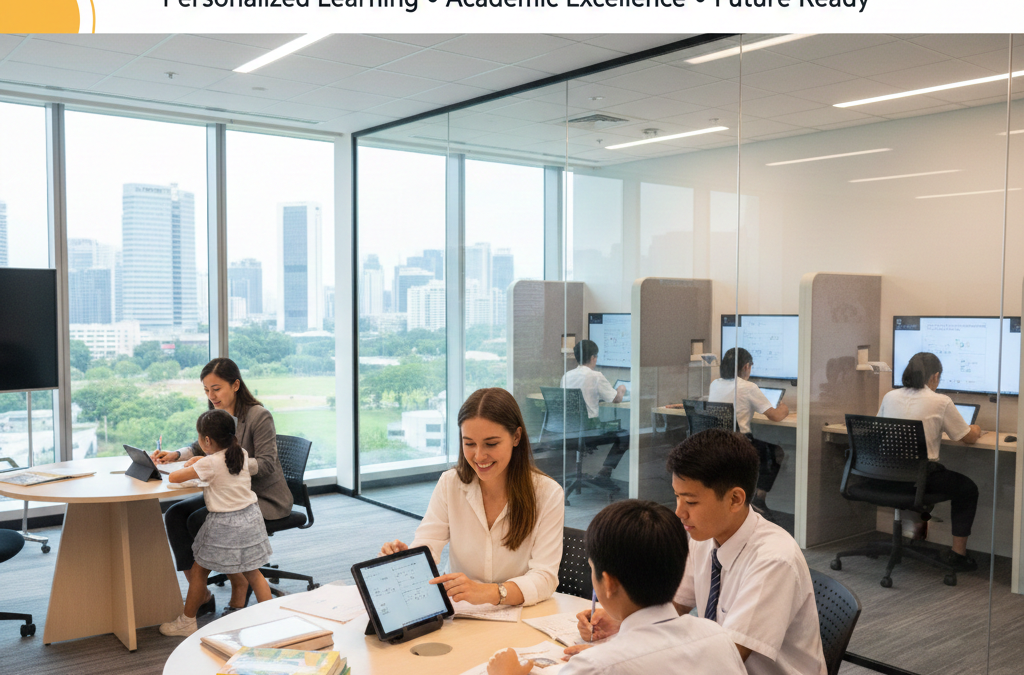
In Singapore, education has always been a national priority, often viewed as the gateway to personal success and societal progress. However, in recent years, private tuition has evolved from a mere supplement to formal education into a major facet of the learning landscape. Parents, teachers, and policymakers alike are now grappling with its growing influence—both as a support system and as a disruptor to traditional schooling.
The Rapid Rise of Private Tuition in Singapore
The tuition industry in Singapore has transformed into a multi-billion-dollar ecosystem, reflecting the deep-rooted cultural emphasis on academic achievement. What began as small group sessions for struggling students has become a booming network of elite tutors and specialized learning centers. Many families now view private tuition as a necessity rather than an optional enhancement, often beginning as early as primary school to gain a competitive edge.
This rapid rise can be attributed to the pressure of national examinations and the importance placed on educational performance. Singapore’s education system is known for its rigor, and the fear of falling behind fuels parents’ investment in private tutoring. As a result, tuition centers have proliferated across neighborhoods, offering everything from subject-specific coaching to holistic enrichment programs designed to develop problem-solving and critical-thinking skills.
However, this growth also underscores the widening gap between students who can afford additional help and those who cannot. While private tuition provides a pathway to improved results, it also raises concerns about equity and access. The government has recognized this potential imbalance, encouraging schools to enhance classroom teaching and introduce programs that reduce the reliance on external tutors.
How Extra Lessons Are Changing the School System
The influence of private tuition extends beyond individual student outcomes—it is reshaping how schools function and how educators approach curriculum delivery. Teachers are increasingly aware that many of their students receive external coaching, prompting some to adjust their teaching methods to bridge gaps between formal learning and the faster-paced tuition material. This dual-track learning environment has, in some cases, altered the classroom dynamic, as students arrive already prepared—or even ahead—of the school syllabus.
Private tutors often provide highly personalized attention that large classrooms cannot replicate. This one-on-one guidance not only helps students strengthen their weaker subjects but also builds confidence and motivation. Recognizing this, formal schools are beginning to adopt more student-centric approaches, integrating differentiated instruction and incorporating technology to mimic the tailored experience offered by private tuition. Such shifts suggest a blending of traditional schooling and personalized learning models inspired by the tuition industry.
Nevertheless, there is growing debate over whether this dependence on tuition undermines the value of the national education system. Some critics argue that it amplifies stress and fosters a results-oriented mindset, while others believe it represents a pragmatic adaptation to a competitive world. Either way, private tuition has become a defining force in Singaporean education—one that continues to challenge and reshape how learning is understood and delivered.
Private tuition has undoubtedly become a fixture in Singapore’s educational culture, both a symbol of ambition and a reflection of societal pressures. While it offers students additional support and drives innovation in teaching, it also highlights the need for balance—between competition and well-being, between access and privilege. As Singapore moves forward, the challenge lies in ensuring that education, whether public or private, remains inclusive, meaningful, and aligned with the broader goal of nurturing lifelong learners in an ever-evolving world.